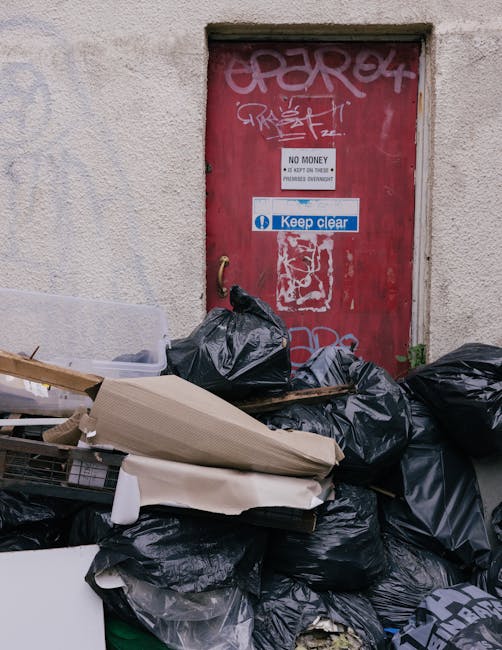
Avoid hidden rubbish removal fees in Enfield
Posted on 06/08/2026
If you've ever booked rubbish removal and then watched the final invoice creep up, you'll know the feeling. It starts with a simple quote, then suddenly there's a lift charge, a minimum-load surcharge, a "heavy item" fee, and a mysterious extra for access. In Enfield, that can turn a tidy clear-out into a messy budget surprise very quickly. This guide shows you how to avoid hidden rubbish removal fees in Enfield, what to ask before you book, and how to compare quotes without getting caught out.
Whether you're clearing a flat near Enfield Town, tidying a garden in Southbury, or shifting bulky bits after a house move, the same principle applies: clear pricing beats clever wording every time. Let's break it down properly.

Why hidden rubbish removal fees in Enfield matters
Hidden fees are more than an irritation. They make it hard to compare providers fairly, and they often show up at the worst possible time: when the rubbish is already on the driveway and you feel pressured to say yes. That pressure is exactly what you want to avoid.
In a local area like Enfield, jobs can vary a lot. A small domestic clearance in a terraced house is very different from a third-floor flat with narrow stairs, or a builders' waste job after a kitchen refit. If a company doesn't explain how it prices access, weight, labour, or disposal, you can end up paying for things you never expected. To be fair, not every extra charge is unreasonable. The issue is surprise, not cost itself.
Good pricing should feel boring in the best possible way. Clear. Predictable. Easy to question. If a quote seems vague, that's usually your first clue to slow down and ask better questions. A few minutes now can save a proper headache later.
Quick take: The safest way to avoid hidden rubbish removal fees in Enfield is to get a written quote, confirm what is and isn't included, and describe the waste as accurately as you can.
For broader context on local property moves and home projects, you may also find our guides like smart real estate purchases in Enfield and selling property in Enfield useful when you're planning clearance around a sale or purchase.
How hidden rubbish removal fees in Enfield works
Most rubbish removal services price work in one of three ways: by load size, by item, or by time and labour. The quote you see at first glance may only cover the headline figure. The real price can change once the crew arrives and checks access, waste type, or volume.
Here are the most common fee triggers:
- Load-based pricing: The price changes if your waste fills more of the truck than expected.
- Item-based pricing: Bulky items such as sofas, wardrobes, or appliances may be priced separately.
- Access charges: Extra cost for stairs, long carries, no parking nearby, or difficult loading.
- Weight-based disposal costs: Heavy materials like rubble or soil can cost more than mixed household waste.
- Minimum charge rules: Even very small jobs may have a minimum booking value.
- Late changes: Adding items on the day can push the job into a higher bracket.
Some providers are perfectly upfront about this. Others are less clear and rely on optimistic wording. A quote that says "from GBPX" without explaining the assumptions is not automatically a bad quote, but it is incomplete. The trick is to make the assumptions visible before anyone turns up with a van.
If you're arranging a local clearance and want to understand typical service types first, it can help to review the company's services overview alongside the relevant page for your job, such as waste clearance in Enfield or rubbish collection in Enfield.
Key benefits and practical advantages
Avoiding hidden fees is not just about saving money, although that's a big part of it. It also makes the whole process calmer. You know where you stand. You can plan your day properly. And you're less likely to end up in a last-minute argument on the pavement, which nobody wants before lunch.
- Better budget control: You can compare providers on a like-for-like basis.
- Less stress on the day: No awkward price renegotiation when the van arrives.
- Fewer disputes: Clear terms mean fewer misunderstandings.
- Smarter decisions: You can choose the right service for the actual amount of waste.
- More confidence in the provider: Transparent pricing usually signals a more organised operation overall.
There's also a practical side most people miss: transparent quotes help you decide whether to split the job. For example, a loft clear-out and a garden waste load might be cheaper as two separate collections, or they might be better handled together. Without proper pricing detail, you're guessing. And guessing with waste removal tends to cost money.
If you're dealing with a specific type of waste, it's worth checking relevant service pages such as furniture disposal, white goods and appliance disposal, or builders' waste disposal so the price reflects the actual job.
Who this is for and when it makes sense
This advice is for anyone booking rubbish removal in Enfield who wants a fair price and no unpleasant surprises. That includes homeowners, tenants, landlords, letting agents, office managers, tradespeople, and anyone in the middle of a clear-out that's taken on a life of its own.
It especially makes sense if you're:
- clearing a flat with awkward access
- disposing of bulky furniture or appliances
- removing mixed waste after decorating
- sorting a loft, garage, or shed that has turned into a time capsule
- managing a probate, move, or end-of-tenancy clearance
- trying to keep business costs predictable
In our experience, hidden-fee problems show up most often when people are in a rush. A last-minute move, a Saturday clean-up before visitors arrive, or a builder needing waste gone by Monday morning. You're busy, the pile is real, and you want the job done. Fair enough. But that's exactly when it pays to pause and ask the right questions.
If you'd like to understand Enfield's wider local context while planning a job, the article getting to know the Enfield borough gives useful background, and local opinion pieces like is Enfield suitable for you can help if you're new to the area.
Step-by-step guidance
Here's the simplest way to keep pricing under control. Nothing fancy. Just the stuff that works.
- List everything you want removed. Be specific. "Old bedroom furniture" is less useful than "double bed frame, mattress, two bedside tables, and one chest of drawers."
- Take photos from a few angles. A quick photo gives the provider a better sense of volume, weight, and access. It also reduces the classic "that's not what we expected" conversation later.
- Explain access clearly. Mention stairs, parking restrictions, lift use, narrow hallways, basement access, or long carries from the property to the vehicle.
- Ask what the quote includes. Labour, loading, transport, disposal, parking issues, and VAT should all be clarified.
- Ask what could increase the price. This is the big one. A straightforward company should be able to tell you the likely add-ons before the booking.
- Request the quote in writing. Email is fine. Message is fine. The point is to have a record.
- Confirm the waste type. Some items cost more to process, especially heavy or specialist waste.
- Check the final price trigger. Ask at what point the quote changes, and who approves that change on site.
A small but useful habit: compare not only the total price, but the wording. A quote that says "all-in price for the items listed, assuming normal access" is usually safer than one that says "estimated collection cost subject to review". The second one isn't always bad, but it gives you less certainty.
For jobs with mixed waste, it can also help to compare the relevant service route. For instance, domestic clear-outs may sit better under domestic waste collection, while a bigger property project might be more suited to house clearance or loft clearance.
Expert tips for better results
The best pricing protection is not a trick. It's preparation. A good provider will still need enough information to price the job properly, so give them the detail that matters.
- Group similar items together. Furniture, general rubbish, and heavy waste may be handled differently.
- Be honest about awkward items. Mattresses, sofas, fridges, paint tins, rubble, and soil can change the quote.
- Check whether staff are doing all the lifting. Some quotes look cheap because the customer is expected to help. Not ideal, frankly.
- Ask about parking and access early. In parts of Enfield, parking can be the bit that quietly changes everything.
- Choose the right service type. A mismatched service often leads to overpaying or being re-quoted on the day.
- Save the booking notes. If there's ever a question, you'll want a simple paper trail.
A slightly nerdy but useful point: if a company is also clear about broader trust matters such as waste carrier licence and compliance, insurance and safety, and payment and security, that usually says something about how they run the rest of the business too. Not a guarantee, of course, but a good sign.
And yes, it's perfectly fine to ask basic questions. "What exactly would make this cost more?" is not annoying. It's sensible. Anyone who acts offended by that question may be hoping you don't ask it.

Common mistakes to avoid
Most hidden-fee problems come from a handful of predictable mistakes. The good news is that all of them are avoidable.
- Accepting a vague quote. "Roughly around this amount" is not the same as a written price.
- Underestimating the volume. A pile looks smaller in the garden than it does once it's loaded into a van.
- Forgetting access issues. Stairs and long carries matter more than many people realise.
- Mixing waste types without asking. Heavy builders' waste with household clutter can change the cost structure.
- Adding extra items on the day without warning. That's a very common reason for a jump in price.
- Not checking disposal expectations. Some items need special handling, and that affects the fee.
There's also the classic "I assumed they meant everything." That one catches people all the time. If the booking was based on three sacks and a chair, and you roll up on collection day with half a garage's worth of stuff, well... the price won't stay the same. Fair enough, really.
If you want practical local examples of the kind of clear-up that can go sideways without planning, the posts on rubbish collection in Enfield Town homes, rubbish clearance tips for Southbury Estate, and bulky rubbish removal in Ponders End flats are especially handy.
Tools, resources and recommendations
You do not need a complicated spreadsheet to keep rubbish removal costs under control. A few simple tools will do most of the work.
- Phone camera: Take clear photos of the waste and the access route.
- Notes app: Keep a written list of items and questions.
- Messaging or email: Get the quote and any changes in writing.
- Measuring tape: Useful for bulky furniture or storage items if you want a tighter estimate.
- Before-and-after checklist: Helps if you're coordinating several rooms or a bigger clearance.
For most readers, the best recommendation is simple: use a provider that explains pricing clearly, shows what services they actually offer, and gives you enough detail to make a fair comparison. If a company has a clear pricing and quotes page, that can save you time before you even request a booking.
When you're dealing with mixed household waste, garden cuttings, or a clear-out after works, it can also help to look at the most relevant service page rather than assuming one general collection will cover everything. For example, garden waste removal, builders waste disposal, furniture removal, and office clearance each serve a different kind of job.
Law, compliance, standards, or best practice
Rubbish removal in the UK isn't just about clearing space. It also involves proper handling, lawful transport, and responsible disposal. You don't need to become a compliance expert, but it does help to know the basics.
In plain English, a legitimate waste carrier should be able to explain how waste is transported and disposed of responsibly. They should also be clear about insurance, safety, and what happens to different waste streams. When price is unusually low and the details are thin, that is often where trouble starts. Not always, but often enough to be cautious.
Best practice usually looks like this:
- clear written pricing before the job
- honest description of waste type and access
- no surprise charges sprung at the door
- appropriate handling of specialist items
- transparent terms and conditions
- secure, traceable payment methods
This is also where it helps if the company has clear company information pages such as about us, terms and conditions, and recycling and sustainability. Those pages do not make a quote cheaper, obviously, but they do give you a better sense of how the business operates.
If the job involves a full property emptying or a sensitive clearance, a little extra diligence goes a long way. That includes checking who is carrying the waste, how they price the job, and whether the service matches what you actually need. Simple enough. But easy to overlook when you're in a rush.
Options, methods, or comparison table
Different pricing approaches suit different jobs. Here's a simple comparison to help you choose the right one.
| Pricing method | Best for | Pros | Watch-outs |
|---|---|---|---|
| Fixed quote | Known volumes and clear access | Predictable, easy to budget | Needs accurate job details |
| Load-based pricing | Mixed household clear-outs | Flexible for varying amounts | Can rise if the load is underestimated |
| Item-based pricing | Bulky single items or a few pieces of furniture | Simple for sofa, fridge, bed, or appliance removal | Multiple items can add up quickly |
| Time and labour pricing | Complex jobs with uncertain access | Works when the scope is hard to pin down | Needs careful oversight to avoid drift |
For most people, a clear fixed quote is the easiest to understand. But if your job is unusual or access is tricky, a reputable provider may prefer to inspect first or explain an estimate with conditions. That can be perfectly reasonable. The key is whether those conditions are explained clearly, not hidden in small print nobody sees until after the van leaves.
Case study or real-world example
Imagine a resident in Enfield clearing a top-floor flat after a move. They have an old wardrobe, a sofa, two mattresses, several bags of mixed rubbish, and a broken fridge in the hallway. At first glance, it sounds like a standard collection.
But the details matter. The flat has narrow stairs. Parking outside is limited. The fridge is a heavy appliance that needs careful handling. The sofa is bulky. The mixed bags are light, but there are more than expected.
One provider gives a very cheap headline quote and says they'll "confirm on arrival." Another asks for photos, checks access, and explains that the final price depends on a fixed list of factors: bulky items, stair carrying, and appliance disposal. The second quote may not be the cheapest at first glance, but it is usually the safer option because it tells the truth up front.
That's the real lesson. A lower starting price is not the same as better value. The better value is the quote that stays sensible when the day arrives and the job is exactly what you described, not a surprise version of it.
Practical checklist
Use this quick checklist before you book:
- Have I listed every item clearly?
- Have I sent photos of the waste and access?
- Do I know whether stairs, parking, or distance will affect the price?
- Is the quote written down?
- Do I understand what is included in the price?
- Have I asked what might trigger an extra charge?
- Is the waste type correctly described?
- Do I know whether labour, loading, disposal, and transport are all covered?
- Have I checked the company's terms and security information?
- Am I comparing like for like with other quotes?
If you can tick most of those boxes, you are already ahead of the average booking. Really.
For local collection needs, you may also want to look at the service that best matches your job, whether that's waste disposal in Enfield or a more specific collection route.
Get a free quote today and see how much you can save.
Conclusion
The best way to avoid hidden rubbish removal fees in Enfield is not complicated. Be specific, ask clear questions, get the quote in writing, and make sure the provider explains what changes the price. That alone prevents most nasty surprises.
It's worth remembering that a fair quote should make sense before the job starts and still make sense when the van arrives. If it doesn't, pause. Ask again. There's no medal for agreeing too quickly.
In the end, transparent rubbish removal is about trust as much as price. And trust, once you've got it, makes the whole job feel easier. Cleaner too, oddly enough.